
UbiComp / ISWC 2024
Conference Program
Program Outline
| Oct 5, 2024 | Oct 6, 2024 | Oct 7, 2024 | Oct 8, 2024 | Oct 9, 2024 | |
|---|---|---|---|---|---|
| Saturday | Sunday | Monday | Tuesday | Wednesday | |
| 8:00 | Registration | Registration | Registration | Registration | Registration |
| 8:30 | |||||
| 9:00 | Workshops/DC | Workshops | Keynote | Papers | Papers |
| 9:30 | |||||
| 10:00 | |||||
| 10:30 | Coffee Break | Coffee Break | Posters 1 | Posters 2 | Posters 3 |
| 11:00 | Workshops/DC | Workshops | Papers | Papers | Papers |
| 11:30 | |||||
| 12:00 | |||||
| 12:30 | Lunch | Lunch | Design Exhibition | Demos | Town Hall |
| 13:00 | |||||
| 13:30 | |||||
| 14:00 | Workshops/DC | Workshops | Papers | Papers | Papers |
| 14:30 | |||||
| 15:00 | |||||
| 15:30 | Coffee Break | Coffee Break | Posters 1 | Posters 2 | Posters 3 |
| 16:00 | Workshops/DC | Workshops | Papers | Papers | Closing |
| 16:30 | |||||
| 17:00 | |||||
| 17:30 | Lab Visits (TBC) | ||||
| 18:00 | Banquet | ||||
| 18:30 | |||||
| 19:00 | |||||
| 19:30 |
Workshops and Tutorial
UbiComp/ISWC 2024 features 11 Full-Day Workshops, 2 Half-Day Workshops, and 1 Half-Day Tutorial that will be running on Saturday, October 5 and Sunday, October 6, before the start of the main conference. For more information and submission guidelines, see the call for participation.
Saturday, October 5th
| Workshop | Organisers | Room |
|---|---|---|
| WellComp 2024 (Half-Day) | Ting Dang, Shkurta Gashi, Dimitris Spathis, Alexander Hoelzemann | TBD |
| Multimodal Sports Interaction: Wearables and HCI in Motion | Vincent van Rheden, Maria Montoya Vega, Don Samitha Elvitigala, Alexander Meschtscherjakov, Florian ‘Floyd’ Mueller | TBD |
| Workshop on Human Activity Sensing Corpus and Applications (HASCA 2024) | Kazuya Murao, Yu Enokibori, Hristijan Gjoreski, Paula Lago, Tsuyoshi Okita, Pekka Siirtola, Kei Hiroi, Philipp M. Scholl, Mathias Ciliberto, Kenta Urano, Marius Bock | TBD |
| Advancing Physiological Methods in Human-Information Interaction (APhyMeHII) | Nattapat Boonprakong, Kaixin Ji, Ziyi Ye, Benjamin Tag, Damiano Spina, Tuukka Ruotsalo, Flora Salim | TBD |
| Heads-Up Computing | Shengdong Zhao, Ian Oakley, Yun Huang, Haiming Liu, Can Liu | TBD |
| FairComp | Lakmal Meegahapola, Dimitris Spathis, Marios Constantinides, Han Zhang, Sofia Yfantidou, Niels van Berkel, Anind K. Dey | TBD |
| EarComp 2024 | Alessandro Montanari, Andrea Ferlini, Nirupam Roy, Xiaoran “Van” Fan, Longfei Shangguan, Fahim Kawsar, Alessandro Montanari, Andrea Ferlini, Jake Stuchbury-Wass, Yang Liu | TBD |
Sunday, October 6th
| Workshop or Tutorial | Organisers | Room |
|---|---|---|
| Solving the Activity Recognition Problem (SOAR) (Tutorial) | Harish Haresamudram, Chi Ian Tang, Sungho Suh, Paul Lukowicz, Thomas Ploetz | TBD |
| Interactive Design with Autistic Children using LLM and IoT for Personalized Training: The Good, The Bad and The Challenging (Half-Day) | Yongfu Wang, Mingyue Tang, Yifan He, Tiffany Y. Tang | TBD |
| UbiComp Mental Health Sensing and Intervention | Dan Adler, Orson Xu, Asif Salekin, Varun Mishra, Hyeokhyen Kwon, Akane Sano, Saeed Abdullah, Yiran Zhao, Manasa Kalanadhabhatta, Han Zhang, Tauhidur Rahman, Zach King, Rony Krell | TBD |
| OpenWearables 2024 | Tobias Röddiger, Michael Beigl, Kristof van Laerhoven, Katia Vega | TBD |
| Multiple Input Modalities and Sensations for VR/AR Interactions (MIMSVAI) | Chuang-Wen You, Yi-Chao Chen, Liwei Chan, Min-Chun Hu, Wei Sun, Tse-Yu Pan, Hao Pan, Yongzhao Zhang | TBD |
| Interpretable, Inclusive, and Immersive Interactions for Ubiquitous AI-infused Physical Systems | Gwangbin Kim, Minwoo Seong, Dohyeon Yeo, Yumin Kang, SeungJun Kim | TBD |
| XAI for U | Martin Gjoreski, Teena Hassan, Mor Vered, Sebastian Houben, Stefan Kopp | TBD |
Main Technical Program (October 7th – 9th)
Opening Keynote

Opening Keynote: Prof. Genevieve Bell, Vice-Chancellor and President, Australian National University
Genevieve holds a PhD in cultural anthropology from Stanford University and is a renowned anthropologist, technologist, and futurist, having spent more than two decades in Silicon Valley helping guide Intel’s product development and social science and design research capabilities. She is best known for her work at the intersection of cultural practice and technology development and for being an important voice in the global debates around artificial intelligence and human society.
In 2017, Genevieve returned to Australia and established the 3A Institute at ANU, in collaboration with CSIRO’s Data61, with the mission of building a new branch of engineering to take AI-enabled cyber-physical systems safely, sustainably and responsibly scale. In 2021, she became the inaugural Director of the new ANU School of Cybernetics, which builds on the foundational work of the 3A Institute and seeks to establish cybernetics as an important tool for navigating major societal transformations, through capability building, policy development and safe, sustainable and responsible approaches to new systems.
In addition to her roles at the ANU and Intel, Genevieve was also a Non-Executive Director of the Commonwealth Bank of Australia Board (January 2019-October 2023) and is currently a Member of the Prime Minister’s National Science and Technology Council, Fellow of the Australian Academy of Technology and Engineering (ATSE), Fellow of the Australian Academy of the Humanities (AAH), Florence Violet McKenzie Chair, SRI International Engelbart Distinguished Fellow, member of the Center for Strategic and International Studies (CSIS) AI Council and an Officer of the Order of Australia.
Closing Keynote

Closing Keynote: Stelarc
Stelarc’s projects explore alternative anatomical architectures. He has performed with a Third Hand, an Extended Arm, a Stomach Sculpture, a Prosthetic Head, with industrial robot arms, exoskeletons and robots. He has exhibited in Japan, Korea, China, Europe, the USA, South America and Australia. In 2006 an ear was surgically constructed on his arm. He participated in the Adelaide Biennial of Australian Art in 2020. He is acknowledged internationally as a pioneer in Performance Art, Media Arts and within the Augmented Humans research community.
He has had Residencies, Visiting Artist and Visiting Research positions at Carnegie Mellon University, Pittsburgh; Nottingham Trent University, Nottingham; Brunel University, London; Ohio State University, Columbus; University of Michigan, Michigan; Monash University, Melbourne; Curtin University, Perth; Keio University, Tokyo and the Academy of Fine Arts, Krakow. He has given presentations in other major universities and art schools in Europe, Asia, the USA and Australia. He has also given keynotes at major international forums, symposiums and conferences.
In 1996 he was made an Honorary Professor of Art and Robotics, Carnegie Mellon University and in 2002 was awarded an Honorary Doctor of Laws by Monash University. In 2010 he was awarded the Ars Electronica Golden Nica Hybrid Arts Prize. In 2015 he received the Australia Council’s Emerging and Experimental Arts Award. In 2016 he was awarded an Honorary Doctorate from the Ionian University, Corfu. In 2023 he was awarded an Honorary Doctorate from the Academy of Fine Arts, Krakow. His artwork is represented by Scott Livesey Galleries, Melbourne.
Main Reception/Banquet (October 8th, 6pm – 9pm)
Plan Your Visit
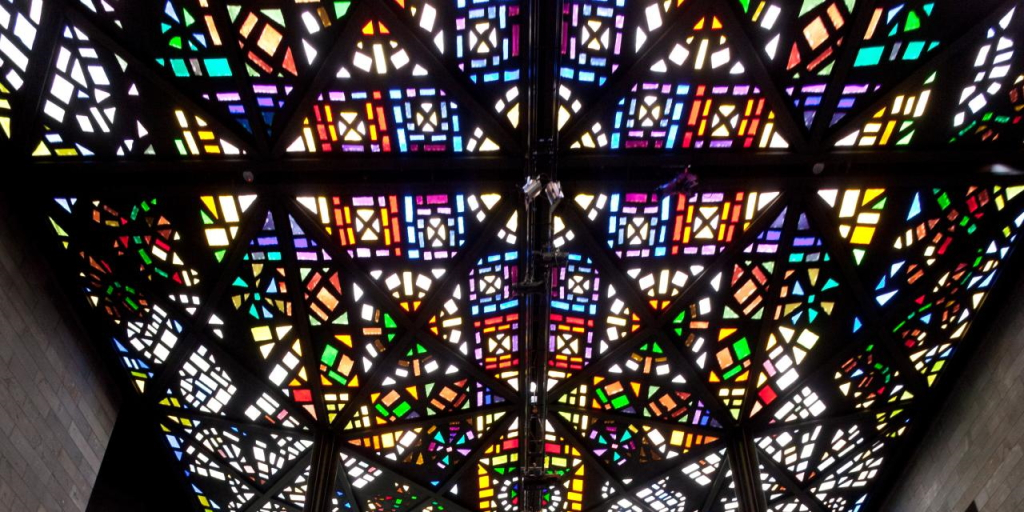
NGV International
180 St Kilda Road, Melbourne
The home of international art, NGV International houses an extensive collection from Europe, Asia, America and Oceania.
NGV International Map
Getting to NGV International
Getting to NGV International by Public Transport
Cloak room
Any backpacks, large bags and umbrellas will need to be cloaked when you enter the Gallery.
See visitor information in other languages
Getting to the NGV
To get to the NGV from the conference venue, the best option is to walk to Swanston street, and take any tram going downhill. It is free to take the tram util the stop “Flinders Station”, and from there walk to the NGV. Note that there is a separate tram stop at the NGV but it is not within the free tram zone.
Public Transport
Visit the Public Transport Victoria website for transport options.
There are a variety of public transport options available for people with limited mobility. Visit the Public Transport Victoria website to search for transport options with your journey preferences.
Accessible tram stops are located directly outside NGV International, on St Kilda Road, and near The Ian Potter Centre: NGV Australia at Fed Square / Swanston Street.
For those with limited mobility, it is recommended that you access The Ian Potter Centre: NGV Australia via the entrance on the Russell Street Extension or via the Fed Square atrium off Flinders Street, as the outdoor path through the main Fed Square area has a sloped and uneven surface.
By Car
Parking
Free street parking spots for people with appropriate permits are located outside the Arts Centre Melbourne on St Kilda Road, however these spots are in high demand.
Paid accessible parking is available at the Arts Centre Melbourne and Australian Ballet Centre Car Park for NGV International. Access via Kavanagh St, please note Sturt St is currently closed. Paid accessible parking is also available at Fed Square for The Ian Potter Centre: NGV Australia.
Taxi or Rideshare
Drop off points are located outside the Arts Centre Melbourne for NGV International, and on the Russell Street Extension for The Ian Potter Centre: NGV Australia.